What Is in Energy Drinks Google Maps? Amazing Guide & Uses
Fast food open on christmas can be a useful search phrase when planning holiday food and drink options, but energy drinks are a completely different category of beverage. If you have searched what is in energy drinks google maps, you may actually be looking for information about energy drinks and the ingredients they contain. Energy drinks are widely available in stores, restaurants, gyms, and convenience shops, but their formulas can differ significantly from one brand to another. For related guidance on beverage choices and recovery, you can also learn more about when can you drink carbonated drinks after tooth extraction and what precautions to consider.
Understanding the ingredient list can help you decide whether a particular drink fits your needs. Some products contain caffeine, sugar, amino acids, vitamins, minerals, herbal extracts, flavorings, and other ingredients designed to improve taste or provide stimulation. This guide explains the main ingredients, possible benefits, different types, safety considerations, and a simple homemade alternative.
What Are Energy Drinks?
Energy drinks are beverages marketed to increase alertness, energy, or mental and physical performance. Unlike ordinary soft drinks, they commonly contain caffeine and may include additional functional ingredients. Caffeine remains one of the most important active ingredients in many energy drinks. For more general information about maintaining a balanced diet and making healthier food choices, you can also visit NHS Eat Well.
According to the U.S. Food and Drug Administration (FDA), energy drinks can contain substantially different amounts of caffeine depending on the brand and serving size. The FDA reports that energy drinks may contain about 41 to 246 milligrams of caffeine in 12 fluid ounces, while some products contain even more in larger servings. This variation makes reading the nutrition and ingredient label especially important.
What Is in Energy Drinks Google Maps?
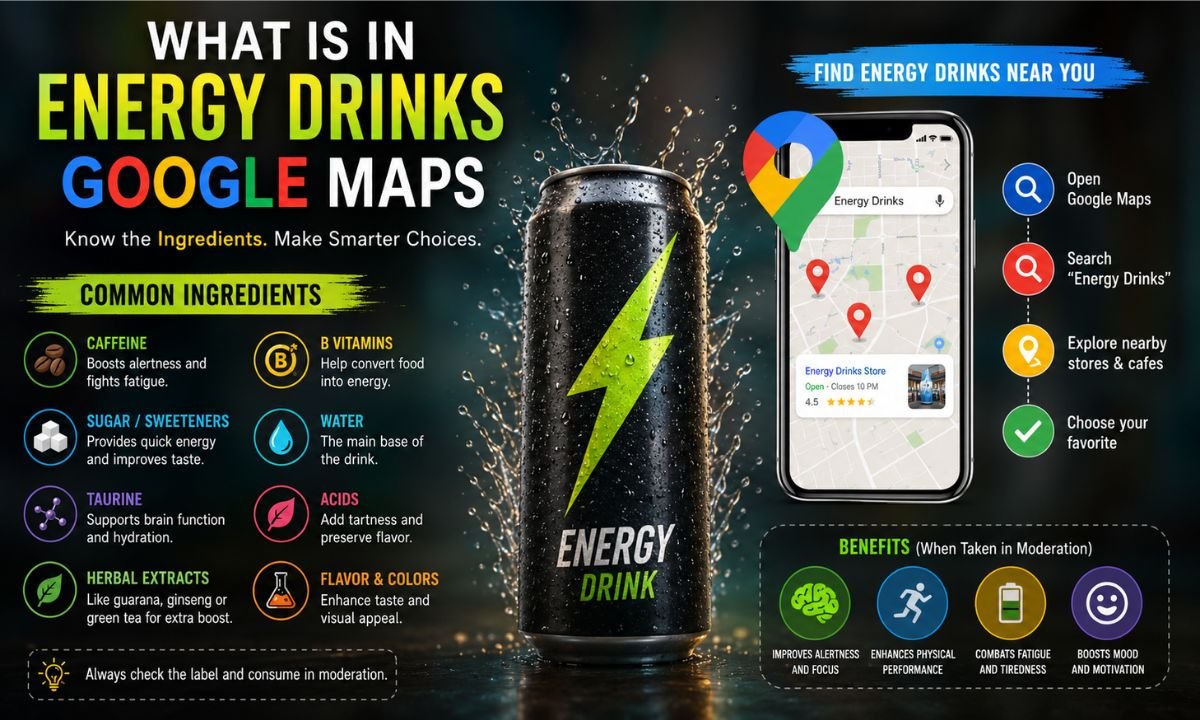
When people search what is in energy drinks google maps, they may be trying to find nearby energy drinks or learn what these beverages contain. Google Maps can help users locate stores, cafés, restaurants, and other places that sell energy drinks, but it does not determine the ingredients inside a specific product.
For ingredient information, the best source is the product’s packaging and the manufacturer’s official information. Ingredients can change between brands, flavors, countries, and product versions. The most common components include caffeine, sweeteners, carbonated water, acids, flavorings, taurine, B vitamins, and sometimes herbal ingredients such as guarana or ginseng.
Main Ingredients Found in Energy Drinks
Caffeine
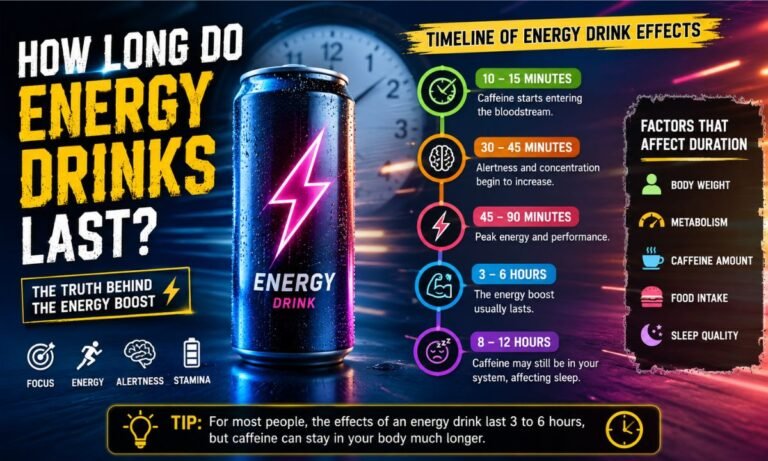
Caffeine is usually the primary stimulant in an energy drink. It works by stimulating the central nervous system and can temporarily increase alertness and reduce feelings of tiredness. The amount varies greatly between products. The FDA notes that most healthy adults can generally consume up to 400 milligrams of caffeine per day without negative effects, although individual sensitivity varies.
Caffeine can also come from botanical ingredients. For example, guarana naturally contains caffeine, so consumers should consider the total caffeine content rather than looking only for the word “caffeine.”
Sugar
Traditional energy drinks may contain considerable amounts of added sugar. Sugar provides carbohydrates that the body can use for energy, but consuming large quantities can add significant calories to the diet. The FDA explains that added sugars include ingredients such as sucrose, dextrose, syrups, and sugars added during food processing.
Its Nutrition Facts guidance lists 50 grams per day as the Daily Value for added sugars based on a 2,000-calorie diet. Sugar-free energy drinks use alternative sweeteners instead. These products can reduce sugar and calories, but they still may contain caffeine.
Taurine
Taurine is an amino-acid-like compound frequently used in energy drinks. FDA documentation identifies taurine as a common component of multi-ingredient energy beverages, often appearing alongside caffeine and other ingredients.
Although taurine is strongly associated with energy drinks, it is important not to assume that taurine itself provides the same stimulating effect as caffeine.
B Vitamins
Many energy drinks contain B vitamins such as niacin, vitamin B6, vitamin B12, and riboflavin. These vitamins play important roles in normal energy metabolism and other bodily functions. However, getting extra B vitamins from a beverage does not automatically mean that the drink will provide extra physical energy. The body uses nutrients in specific biological processes, while the noticeable stimulating effect of many energy drinks primarily comes from caffeine.
Herbal Ingredients
Some formulas include botanical ingredients such as guarana, ginseng, green tea extract, or yerba mate. These ingredients can provide caffeine or other plant compounds. Because formulations differ, consumers should check the label rather than assuming every energy drink contains the same herbs.
Flavorings and Acids
Energy drinks often contain natural or artificial flavors to create their distinctive taste. Citric acid and other food acids may provide a tart flavor and help maintain the desired characteristics of the beverage. Carbonated versions also contain carbonated water, which creates the familiar fizzy texture.
Types of Energy Drinks
Energy drinks come in several forms. Their differences usually involve caffeine levels, sugar content, serving size, and additional ingredients.
| Type | Typical Features | Common Purpose |
| Traditional Energy Drink | Caffeine, sugar, flavorings | Alertness and stimulation |
| Sugar-Free Energy Drink | Caffeine and low- or zero-sugar sweeteners | Lower-sugar option |
| Energy Shot | Highly concentrated ingredients in a small serving | Quick caffeine intake |
| Natural-Style Energy Drink | Plant extracts and natural flavor claims | Consumers seeking botanical ingredients |
| Vitamin Energy Drink | Caffeine plus added vitamins | Alertness with added nutrients |
| Pre-Workout Energy Drink | Caffeine and performance-oriented ingredients | Exercise and training |
| Sparkling Energy Drink | Carbonated water, caffeine, flavors | Fizzy alternative to regular drinks |
The exact formula varies by manufacturer, so the table should be viewed as a general classification rather than a description of every product.
What Are the Potential Benefits of Energy Drinks?
The main potential benefit comes from caffeine. Caffeine can temporarily increase alertness and help people feel less tired. This effect explains why people often choose caffeinated beverages while studying, working, traveling, or completing demanding tasks. Energy drinks can also provide carbohydrates when they contain sugar. For someone who needs quick calories, a sugary beverage can provide readily available carbohydrates. However, this does not make sugary energy drinks a necessary part of a balanced diet.
Some products contain vitamins and minerals that contribute to normal nutritional functions. However, people should not rely on energy drinks as their primary source of essential nutrients. Another possible advantage is convenience. A ready-to-drink beverage requires no preparation, which makes it easy to carry and consume.
Are Energy Drinks Healthy?
There is no single answer because energy drinks vary considerably. A low-sugar drink with moderate caffeine is nutritionally different from a large sugary drink with a high caffeine concentration. The most important factors are serving size, caffeine content, added sugar, and individual sensitivity.
The FDA specifically notes that children and teenagers should avoid energy drinks because of their caffeine and sugar content. Excess caffeine in young people can contribute to problems such as increased heart rate, anxiety, and sleep difficulties. Adults should also pay attention to their total daily caffeine intake from coffee, tea, soft drinks, chocolate, supplements, and energy drinks.
Energy Drinks and Hydration
Energy drinks should not automatically replace water. Some contain caffeine and sugar, while their formulation varies widely. Energy drinks are also different from sports drinks. FDA educational material explains that sports drinks are designed primarily to provide fluids, carbohydrates, and electrolytes lost during exercise, whereas energy drinks commonly focus on caffeine and stimulation. For everyday hydration, plain water remains a simple choice.
What Is in Energy Drinks Google Maps Searches Really Tell You
A search for what is in energy drinks google maps may help you discover nearby locations where energy drinks are available, but location information does not tell you whether a drink contains caffeine, sugar, taurine, or herbal extracts. Before buying a product you find through a local search, check the actual package. Look for:
- Serving size
- Total caffeine per serving
- Added sugar
- Calories
- Sweeteners
- Herbal ingredients
- Vitamins and minerals
- Allergy information
This approach gives you more reliable information than assuming all energy drinks have the same recipe.
How to Make an Energy Drink at Home
You can make a simple homemade energy-style beverage without trying to reproduce the concentrated caffeine levels found in commercial products. A refreshing option can combine water, citrus fruit, and a small amount of natural carbohydrate.
Simple Homemade Citrus Energy Drink
Ingredients:
- 1 cup cold water
- ½ cup fresh orange juice
- 1 tablespoon lemon juice
- 1 teaspoon honey, optional
- Ice
- A few mint leaves, optional
Method
Add the water and orange juice to a glass. Mix in the lemon juice and honey if you want additional sweetness. Stir thoroughly, add ice, and finish with mint.
This homemade drink provides fluids and carbohydrates from the fruit and honey. It does not contain the concentrated caffeine found in commercial energy drinks, which makes it different from a conventional caffeinated energy beverage. If you want caffeine, it is safer to control the amount through a clearly measured source such as tea or coffee rather than adding concentrated caffeine powder. The FDA warns that pure or highly concentrated caffeine can be extremely dangerous because very small measurement errors can result in excessive doses.
How to Read an Energy Drink Label
Reading the label is one of the easiest ways to understand what you are consuming. Start with the serving size because a single can may contain more than one serving. Next, check the caffeine amount. If the label lists caffeine from several sources, consider the total amount rather than focusing on one ingredient.
Then check added sugar and calories. A drink with a large amount of added sugar can contribute significantly to your daily intake. Finally, review the ingredient list. Ingredients appear in descending order by weight in many packaged foods, so the beginning of the list can provide useful information about the drink’s formulation.
Possible Side Effects of Too Much Caffeine
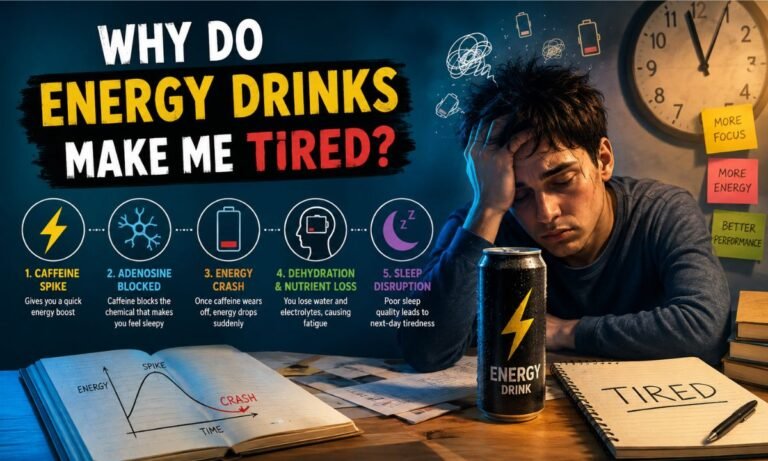
Although caffeine can improve alertness, too much can cause unwanted effects. People may experience nervousness, restlessness, headaches, digestive discomfort, a racing heartbeat, or difficulty sleeping. The FDA emphasizes that caffeine sensitivity varies from person to person. Certain medical conditions and medications can also increase sensitivity.
If caffeine regularly interferes with sleep or causes uncomfortable symptoms, reducing intake may be appropriate. People who are pregnant, breastfeeding, taking certain medications, or managing a health condition should discuss caffeine intake with a healthcare professional.
Energy Drinks vs. Coffee
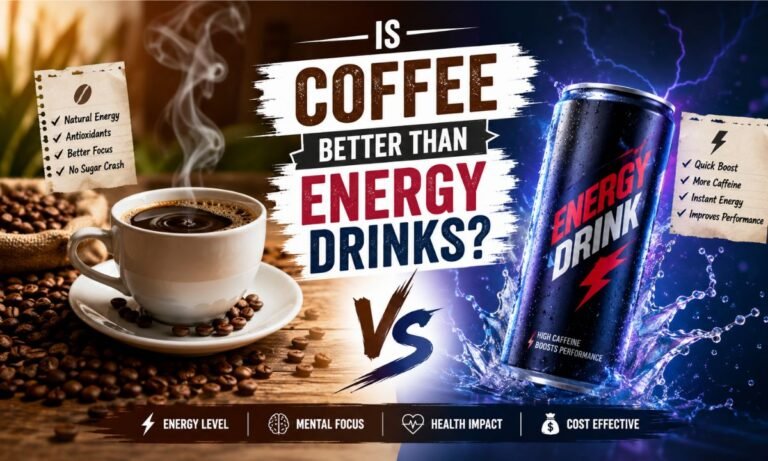
Both energy drinks and coffee can contain caffeine, but their nutritional profiles differ. Plain coffee generally contains very few calories when consumed without sugar, cream, or flavored syrups. Energy drinks may contain sugar, artificial sweeteners, vitamins, amino acids, herbal extracts, and flavorings in addition to caffeine.
Neither beverage is automatically the healthier choice in every situation. The better option depends on the serving size, caffeine content, added ingredients, and how the drink fits into your overall diet.
Final Thoughts
Understanding what is in energy drinks google maps starts with recognizing that energy drinks are not all made the same. Caffeine is usually the central active ingredient, while sugar, sweeteners, taurine, B vitamins, herbal extracts, acids, flavors, and other ingredients can vary between products. Energy drinks may temporarily improve alertness, but more is not necessarily better. Checking caffeine, sugar, serving size, and the complete ingredient list can help you make an informed decision.
If you use Google Maps to find a nearby product, remember that the map can help you locate it, while the package label provides the most useful information about what is actually inside. For a simple alternative, homemade citrus drinks can provide hydration and carbohydrates without the concentrated stimulant content found in many commercial energy beverages. The key is to choose drinks according to your individual needs and consume caffeinated products responsibly.
Frequently Asked Questions
Q. What is usually the main ingredient in an energy drink?
Caffeine is usually the primary active stimulant. Many products also contain water, sweeteners, flavors, acids, taurine, vitamins, and other functional ingredients.
Q. Do all energy drinks contain sugar?
No. Some energy drinks contain significant amounts of added sugar, while others use alternative sweeteners and contain little or no sugar.
Q. Can teenagers drink energy drinks?
Health experts advise against energy drinks for children and teenagers because of their caffeine and sugar content.
Q. Are energy drinks the same as sports drinks?
No. Sports drinks generally focus on hydration, carbohydrates, and electrolytes, while energy drinks commonly contain caffeine and other stimulating ingredients.
Q. How much caffeine is in an energy drink?
The amount varies by product and serving size. The FDA reports that energy drinks can range from about 41 to 246 milligrams of caffeine per 12 fluid ounces, although some products contain higher amounts.
Q. Can I make an energy drink at home?
Yes. You can make a simple homemade energy-style drink using water, citrus juice, and a small amount of honey. Avoid using concentrated caffeine powder because highly concentrated caffeine can be dangerous.