How Long Do Energy Drinks Last? Hidden Risks and Benefits
Many people searching for fast food open on christmas are also looking for convenient beverages that provide a quick energy boost during long workdays, travel, study sessions, or workouts. Energy drinks have become one of the most popular choices for instant alertness, but many people still wonder how long do energy drinks last and whether their effects are worth it. People who want a gentler boost without stimulants often explore caffeine free energy drinks as an alternative for staying refreshed and productive throughout the day.
The answer depends on several factors, including the caffeine content, sugar level, metabolism, body weight, and whether you drink the beverage on an empty stomach. While many people feel energized shortly after drinking one, the stimulating effects do not last forever. This guide explains everything you need to know about how long do energy drinks last, how they work inside the body, their benefits, different types, how to make healthier versions at home, and practical tips for consuming them safely.
What Are Energy Drinks?
Energy drinks are beverages designed to increase mental alertness and physical performance for a limited period. Most products contain caffeine as their primary active ingredient. Many also include sugar, B vitamins, taurine, guarana, ginseng, amino acids, and other plant extracts.
Unlike sports drinks that mainly replace fluids and electrolytes, energy drinks focus on stimulating the nervous system. That is why many students, professionals, gamers, drivers, and athletes use them when they need extra concentration or reduced fatigue.
How Do Energy Drinks Work?
Energy drinks work by stimulating the central nervous system. Caffeine blocks adenosine, a chemical in the brain responsible for making you feel sleepy. When adenosine is blocked, the brain releases more dopamine and adrenaline.
As a result, you may notice:
- Increased alertness
- Better concentration
- Reduced tiredness
- Improved reaction time
- Temporary improvement in endurance
Sugar-containing energy drinks provide an additional burst of quick energy because glucose enters the bloodstream rapidly. However, that boost may also be followed by an energy crash later.
How Long Do Energy Drinks Last?
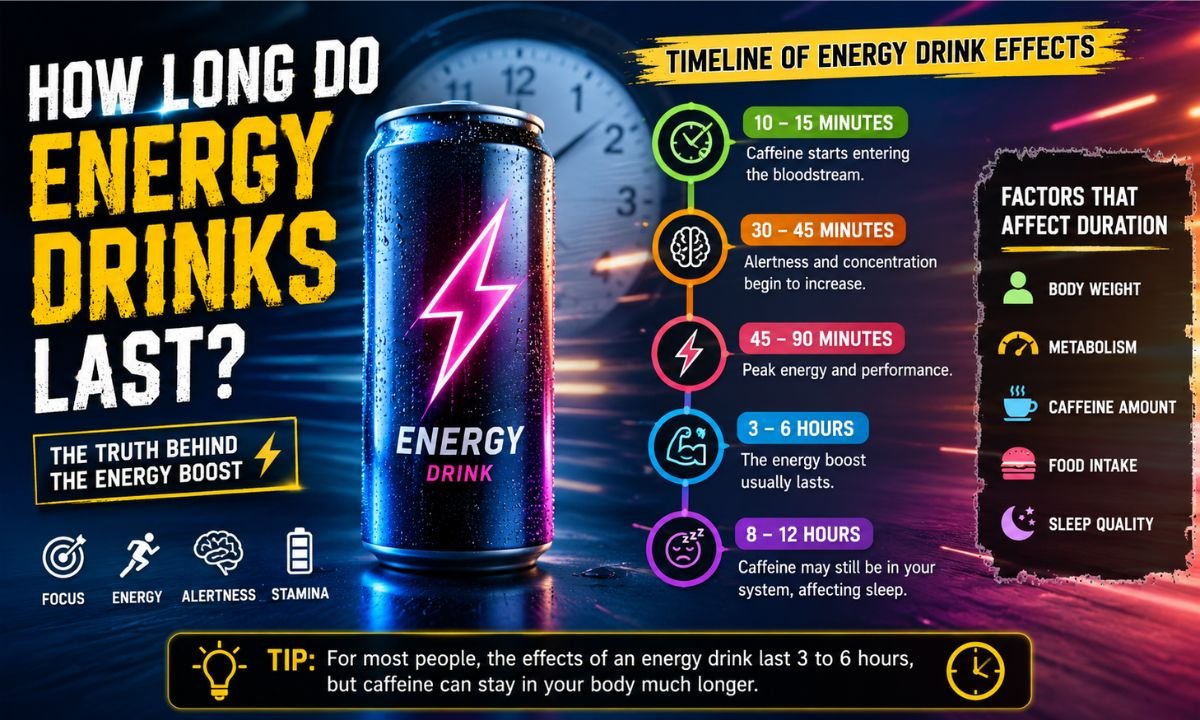
Many people ask how long do energy drinks last because the answer helps them decide the best time to drink one. Most energy drinks begin working within 15 to 45 minutes after consumption. The strongest effects usually appear between 30 and 90 minutes. The noticeable energy boost generally lasts between 3 and 6 hours, although caffeine remains inside the body much longer.
The average healthy adult has a caffeine half-life of approximately 5 hours. That means if you consume 200 mg of caffeine at noon, around 100 mg may still remain in your system by 5 p.m. Some people continue feeling caffeine’s effects for 8 to 12 hours, especially if they are sensitive to stimulants.
Timeline of Energy Drink Effects
| Time After Drinking | What Happens |
| 10–15 minutes | Caffeine begins entering the bloodstream. |
| 30–45 minutes | Alertness starts increasing noticeably. |
| 45–90 minutes | Peak stimulation occurs. |
| 3–6 hours | Most people still feel energized. |
| Around 5 hours | Half of the caffeine remains in the body. |
| 8–12 hours | Sensitive individuals may still notice effects. |
| Up to 24 hours | Caffeine may completely leave the body depending on metabolism. |
Factors That Affect How Long Energy Drinks Last
Several personal factors determine how long the stimulating effects remain.
Caffeine Amount
The higher the caffeine content, the longer the effects usually last. Some energy drinks contain less than 80 mg of caffeine, while others exceed 300 mg.
Body Weight
People with lower body weight often experience stronger caffeine effects because the stimulant becomes more concentrated in the body.
Metabolism
Fast metabolism clears caffeine more quickly. People with slower metabolism may feel energized for a much longer period.
Food Intake
Drinking an energy drink after eating usually slows caffeine absorption slightly. Drinking one on an empty stomach may produce faster and stronger effects.
Age
Older adults often process caffeine more slowly than younger adults.
Sleep Quality
Someone who is sleep-deprived may feel a stronger initial boost, but the body still needs proper rest to recover fully.
Why Do Some People Feel an Energy Crash?
An energy crash usually happens because of sugar or overstimulation. After drinking a sugary energy drink, blood sugar rises rapidly. The body responds by releasing insulin, which can lower blood sugar again. This process may leave you feeling tired, hungry, or less focused.
Other reasons include:
- Poor hydration
- Lack of sleep
- Drinking multiple energy drinks
- Consuming too much caffeine
Sugar-free options often reduce the intensity of this crash.
Benefits of Energy Drinks
When consumed responsibly, energy drinks may provide several short-term benefits.
Improved Alertness
Caffeine helps people stay awake during long study sessions, work shifts, or road trips.
Better Concentration
Many users experience improved mental focus during demanding tasks.
Enhanced Physical Performance
Some research suggests caffeine may improve endurance and reduce perceived effort during exercise.
Faster Reaction Time
Gamers, athletes, and professionals sometimes notice quicker reactions after moderate caffeine intake.
Temporary Fatigue Reduction
Energy drinks may help reduce feelings of tiredness when used occasionally.
Although these benefits are real, they should never replace regular sleep, healthy meals, and proper hydration.
Types of Energy Drinks
Different energy drinks meet different needs. Understanding the available options helps consumers make informed choices.
| Type | Main Features | Best For |
| Traditional Energy Drinks | Caffeine and sugar | Quick energy boost |
| Sugar-Free Energy Drinks | Caffeine without sugar | Lower-calorie option |
| Natural Energy Drinks | Plant extracts and natural caffeine | Health-conscious consumers |
| Organic Energy Drinks | Organic ingredients | Clean-label preference |
| Electrolyte Energy Drinks | Added electrolytes | Active lifestyles |
| Protein Energy Drinks | Protein plus caffeine | Fitness enthusiasts |
| Vitamin Energy Drinks | Extra vitamins and minerals | Daily nutritional support |
| Herbal Energy Drinks | Herbal ingredients like ginseng | Mild stimulation |
Common Ingredients Found in Energy Drinks
Most energy drinks contain a combination of ingredients designed to improve energy and focus.
Caffeine
The primary stimulant that increases alertness.
Taurine
An amino acid often included to support physical performance.
Guarana
A natural plant that contains additional caffeine.
Ginseng
A traditional herb commonly associated with reducing fatigue.
B Vitamins
Help support normal energy metabolism.
Sugar
Provides quick energy but may contribute to an energy crash later.
Homemade Energy Drink Recipe
Many people prefer homemade drinks because they control the ingredients and sugar content.
Ingredients
- 2 cups cold water
- Juice of one lemon
- Juice of one orange
- 1 tablespoon honey
- A pinch of sea salt
- Fresh grated ginger
- Ice cubes
- Optional green tea for natural caffeine
Instructions
Mix all ingredients thoroughly until the honey dissolves completely. Add ice cubes and serve immediately. This homemade drink provides hydration, natural carbohydrates, vitamin C, and a refreshing flavor without excessive artificial additives.
Homemade Natural Energy Drink Variations
Green Tea Citrus Drink
Combine brewed green tea, lemon juice, honey, and mint.
Coconut Water Energy Drink
Mix coconut water with pineapple juice and lime.
Berry Smoothie
Blend berries, banana, Greek yogurt, and oats.
Matcha Drink
Mix matcha powder with water, honey, and lemon juice.
These homemade options provide steady energy with fewer processed ingredients.
How Much Caffeine Is Too Much?
Health experts generally recommend that healthy adults consume no more than 400 mg of caffeine per day. Teenagers, pregnant women, and people with heart conditions should consume much less or avoid energy drinks unless advised otherwise by a healthcare professional.
Can Energy Drinks Affect Sleep?
Yes. Even if you no longer feel energized, caffeine may still remain inside your body. If you drink an energy drink late in the afternoon or evening, you may experience:
- Difficulty falling asleep
- Reduced sleep quality
- More nighttime awakenings
- Feeling tired the next day
Avoid consuming energy drinks within several hours of bedtime if you want quality sleep.
Signs You Have Consumed Too Much
Excess caffeine may cause:
- Nervousness
- Fast heartbeat
- Anxiety
- Headache
- Restlessness
- Upset stomach
- Difficulty sleeping
- Shaking hands
If severe symptoms occur, medical attention may be necessary.
Are Sugar-Free Energy Drinks Better?
Sugar-free energy drinks reduce calorie intake and eliminate large sugar spikes. However, they still contain caffeine and other stimulants, so moderation remains important. People should always read nutrition labels before choosing any energy drink.
Who Should Avoid Energy Drinks?
Some individuals should limit or avoid energy drinks.
These include:
- Children
- Pregnant women
- Breastfeeding mothers
- Individuals with heart disease
- People with uncontrolled high blood pressure
- Those sensitive to caffeine
Consulting a healthcare provider is always the safest approach for anyone with existing medical conditions.
Healthy Ways to Maintain Energy Naturally
Energy drinks provide only temporary stimulation. Long-term energy depends on healthy daily habits. Learning more about healthy nutrition from the Harvard Nutrition Source can help people make informed food choices that support overall wellness and steady energy levels.
Good habits include:
- Sleeping 7 to 9 hours each night
- Drinking enough water
- Eating balanced meals
- Exercising regularly
- Managing stress
- Limiting excessive caffeine
- Taking short movement breaks during work
These habits support sustainable energy throughout the day.
Conclusion
Understanding how long do energy drinks last helps you make smarter decisions about when and how to consume them. Most people experience increased alertness for 3 to 6 hours, while caffeine may stay in the body for much longer. Factors such as metabolism, caffeine content, body weight, food intake, and sleep habits all influence the duration of the effects.
If you enjoy energy drinks, consume them in moderation, pay attention to the caffeine content, and avoid drinking them too close to bedtime. Homemade alternatives made with natural ingredients can also provide refreshing energy while reducing your intake of added sugars and artificial additives. By choosing wisely and maintaining healthy lifestyle habits, you can support consistent energy levels throughout the day while minimizing unwanted side effects.
Frequently Asked Questions
1. How long do energy drinks last in your body?
Most people feel the effects for 3 to 6 hours, while caffeine may remain in the body for up to 12 hours or longer depending on metabolism.
2. How long do energy drinks take to start working?
Most begin working within 15 to 45 minutes, with peak effects around 30 to 90 minutes.
3. Can I drink an energy drink before bed?
It is generally not recommended because caffeine may interfere with sleep for several hours.
4. Are homemade energy drinks healthier?
Homemade versions often contain fewer artificial ingredients and allow better control over sugar and caffeine.
5. Do sugar-free energy drinks last longer?
Their stimulating effects are usually similar because caffeine, not sugar, provides most of the alertness.
6. Can I drink energy drinks every day?
Occasional use within recommended caffeine limits is generally safer than heavy daily consumption, but relying on energy drinks every day is not a substitute for healthy sleep and nutrition.