Do Energy Drinks Cause Infertility? Hidden Risks Explained
When people search for fast food open on christmas, they may also come across questions about popular drinks and their effects on health. One common concern is, do energy drinks cause infertility? Energy drinks contain caffeine, sugar, stimulants, and other ingredients that can affect the body. Because reproductive health depends on many factors, it is understandable that people want to know whether regular energy drink consumption could affect fertility. People also have similar questions about other popular beverages, including does starbucks give free birthday drinks
The short answer is that energy drinks have not been proven to directly cause infertility in humans. However, frequent or high consumption may contribute to factors that can influence reproductive health, particularly when it leads to excessive caffeine intake, poor sleep, metabolic problems, or other unhealthy habits. This article explains what researchers know about energy drinks, fertility, caffeine, sperm health, hormones, and reproductive health.
What Are Energy Drinks?
Energy drinks are beverages designed to increase alertness and reduce feelings of tiredness. Their main active ingredient is usually caffeine. Many products also contain sugar, taurine, B vitamins, guarana, ginseng, and other substances. The amount of caffeine varies considerably between products. Some energy drinks contain caffeine comparable to a cup of coffee, while larger servings may contain substantially more.
The body responds to caffeine by stimulating the central nervous system. This can temporarily improve alertness and concentration. However, consuming large amounts can also cause nervousness, rapid heartbeat, sleep problems, and digestive discomfort. Energy drinks differ from ordinary soft drinks because they often combine caffeine with several additional stimulants.
Do Energy Drinks Cause Infertility?
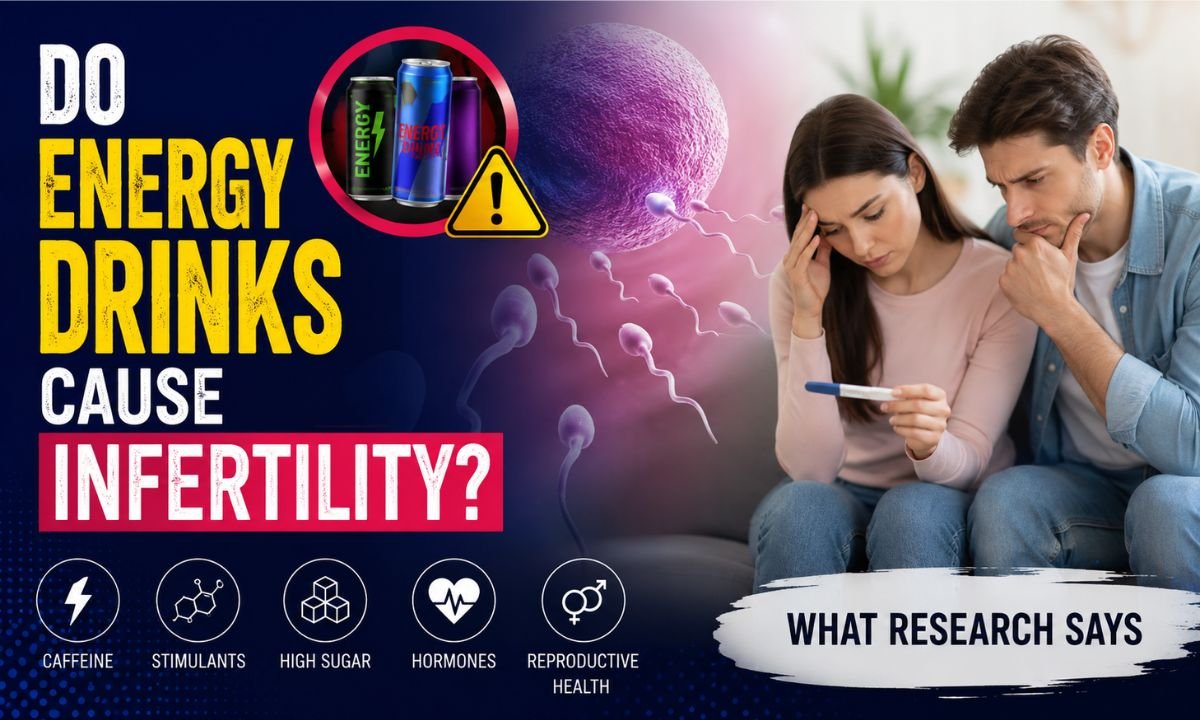
So, do energy drinks cause infertility? Current evidence does not establish that drinking energy drinks directly causes infertility in men or women. Infertility has many possible causes. Age, reproductive disorders, hormonal conditions, sperm abnormalities, certain medications, lifestyle factors, infections, and other medical conditions can affect fertility. Research into caffeine and reproductive health has produced mixed findings. Some studies have investigated whether high caffeine intake affects conception, pregnancy outcomes, sperm quality, or reproductive hormones.
However, these studies do not prove that energy drinks themselves cause permanent infertility. Energy drinks can still become a concern when someone consumes them frequently or in large quantities. Excessive caffeine may interfere with sleep and increase anxiety, while high-sugar varieties can add substantial amounts of sugar and calories to the diet. Therefore, it is more accurate to view energy drinks as a potential lifestyle factor rather than a confirmed direct cause of infertility.
How Caffeine May Relate to Fertility
Caffeine is one of the most studied ingredients in energy drinks. Researchers have examined its possible relationship with fertility and pregnancy for many years. For most healthy adults, moderate caffeine consumption can fit into a balanced diet. The concern generally increases when consumption becomes excessive.
High caffeine intake can interfere with sleep. Poor sleep can affect energy, mood, stress levels, and general health. These factors can indirectly influence reproductive well-being. For people trying to conceive, keeping caffeine intake moderate is a sensible approach. Anyone with concerns about fertility should also consider their total daily caffeine intake from coffee, tea, cola, chocolate, energy drinks, and supplements.
Energy Drinks and Male Fertility
Male fertility depends heavily on sperm production and sperm function. Sperm count, movement, shape, and DNA integrity can all play a role in reproductive success. Researchers have examined whether caffeine and caffeinated beverages influence these measures. Results vary between studies, so there is not enough evidence to say that energy drinks directly make men infertile. However, frequent energy drink consumption may be associated with lifestyle patterns that are less favorable for reproductive health.
For example, someone who regularly replaces sleep with caffeinated drinks may experience chronic sleep deprivation. Some energy drinks also contain high amounts of added sugar. Excessive sugar intake can contribute to unwanted weight gain and metabolic problems when it becomes part of an overall unhealthy diet. Maintaining a healthy weight, exercising regularly, sleeping well, avoiding tobacco, and eating a nutrient-rich diet are generally more important foundations for supporting male reproductive health.
Energy Drinks and Female Fertility
Female fertility can be influenced by age, ovulation, reproductive hormones, body weight, medical conditions, and other factors. There is no strong evidence showing that ordinary consumption of energy drinks directly causes permanent female infertility. However, high caffeine consumption deserves attention, particularly during pregnancy or when trying to conceive.
People planning pregnancy should discuss caffeine intake with a healthcare professional because recommended limits can differ depending on pregnancy status and individual circumstances. Energy drinks can also contain herbal stimulants and other ingredients that may not have been studied as thoroughly as caffeine. This makes it important to read the complete ingredient label rather than focusing only on the caffeine amount.
Can Sugar in Energy Drinks Affect Reproductive Health?
Sugar does not directly cause infertility. However, consuming large quantities of sugary beverages can contribute to excessive calorie intake. Over time, a consistently high-calorie diet may contribute to weight gain and metabolic health problems. Both very low and very high body weight can affect reproductive function in some people.
For this reason, regularly drinking sugar-heavy energy drinks may be less favorable than choosing water or other lower-sugar beverages. A sugar-free energy drink avoids added sugar, but it still contains caffeine and other ingredients. Therefore, switching to a sugar-free product does not automatically make frequent energy drink consumption ideal.
Types of Energy Drinks
Energy drinks come in several forms. Their ingredients and caffeine content can differ significantly.
| Type | Common Features | Main Consideration |
| Traditional energy drinks | Caffeine and added sugar | Can provide substantial caffeine and sugar |
| Sugar-free energy drinks | Caffeine with little or no sugar | Still contain stimulants |
| Energy shots | Concentrated caffeine in a small serving | Easy to consume quickly |
| Pre-workout energy drinks | Caffeine and performance-focused ingredients | May contain multiple stimulants |
| Natural-style energy drinks | May contain tea, guarana, or herbs | Natural ingredients can still contain caffeine |
| Homemade energy drinks | Fruit, water, and optional caffeine sources | Ingredients and quantities are easier to control |
Reading the serving size is particularly important. A container may contain more than one serving, meaning the total caffeine can be higher than expected.
Are There Any Benefits of Energy Drinks?
Energy drinks can provide temporary benefits because caffeine can increase alertness and reduce the perception of tiredness. Some people use them during long work sessions, travel, or physically demanding activities. Caffeine may also temporarily improve attention and exercise performance in some circumstances. However, these benefits do not mean energy drinks improve fertility.
There is no established fertility benefit from drinking energy drinks. If someone feels tired regularly, relying on energy drinks can hide the underlying reason for fatigue. Poor sleep, dehydration, an unbalanced diet, stress, or an underlying health issue may contribute to tiredness. A balanced diet and adequate sleep provide more sustainable support for daily energy.
Can You Make an Energy Drink at Home?
A homemade energy-style beverage can be a simple alternative when you want control over the ingredients. You can make one without using concentrated stimulants. For a basic homemade drink, combine cold water with fresh lemon or lime juice and a small amount of fruit juice. You can add ice and fresh fruit for flavor. If you want sweetness, use a modest amount rather than adding large quantities of sugar.
Another option is unsweetened green tea served chilled. Green tea naturally contains caffeine, so you should still count it toward your daily caffeine intake. A simple homemade recipe could include:
- 1 cup of cold water
- A small amount of lemon juice
- A few pieces of fresh fruit
- Ice
- A small amount of honey if desired
Mix the ingredients and serve immediately. This beverage will not provide the same stimulant effect as a commercial energy drink, but it can provide hydration and flavor without the large ingredient list found in many commercial products. If you specifically want a caffeinated homemade drink, avoid adding concentrated caffeine powders. Measuring concentrated caffeine incorrectly can be dangerous.
How Much Is Too Much?
There is no single energy drink amount that is appropriate for everyone because caffeine sensitivity varies. The important factor is total daily caffeine intake, not simply the number of cans consumed. Coffee, tea, cola, chocolate, pre-workout products, medications, and supplements can all contribute to the daily total. Check the caffeine amount printed on the label and consider the serving size. The FDA notes that caffeine intake can vary from person to person and recommends that most adults stay around 400 mg of caffeine per day unless their healthcare provider advises otherwise.
Drinking several caffeinated products in the same day can quickly increase total intake. People who experience insomnia, anxiety, shakiness, headaches, heart palpitations, or digestive problems after consuming caffeine should reduce their intake and consider speaking with a healthcare professional. Pregnant people should follow pregnancy-specific caffeine guidance from a qualified healthcare professional.
Does Stopping Energy Drinks Improve Fertility?
If someone drinks energy drinks frequently, reducing consumption can improve several aspects of general health. Cutting back may improve sleep, reduce excess sugar intake, and make it easier to maintain a balanced diet. However, stopping energy drinks should not be viewed as a guaranteed fertility treatment.
If a person has difficulty conceiving, the cause may involve factors unrelated to energy drinks. A healthcare professional can evaluate reproductive health and identify potential causes. For men, evaluation may include a semen analysis. For women, clinicians may assess ovulation, reproductive hormones, medical history, and other factors depending on the situation.
When Should You Talk to a Doctor?
Anyone who has concerns about fertility should avoid assuming that one food or beverage is responsible. Medical advice becomes especially important when someone has been trying to conceive without success or has symptoms suggesting a reproductive problem. A doctor can review lifestyle habits, medications, medical conditions, caffeine consumption, and other factors.
Couples may also benefit from being evaluated together because fertility problems can involve either partner or both partners. If you are concerned about the amount of caffeine you consume, a healthcare professional can help you choose an appropriate intake based on your circumstances.
Healthy Habits That Support Reproductive Health
Instead of focusing on a single beverage, it is useful to consider the overall lifestyle. Eating a varied diet containing fruits, vegetables, whole grains, protein sources, and healthy fats can support general health. Regular physical activity can also contribute to healthy weight management and cardiovascular health.
Adequate sleep is another important factor. Using energy drinks to compensate for consistently poor sleep may create a cycle in which caffeine temporarily masks tiredness without addressing the underlying problem. Avoiding tobacco and recreational drugs is also important for reproductive health. Alcohol intake should be considered carefully, particularly during pregnancy or when trying to conceive.
Final Verdict: Do Energy Drinks Cause Infertility?
The evidence does not show that energy drinks directly cause permanent infertility in humans. However, do energy drinks cause infertility remains a reasonable question because these beverages can contain substantial caffeine, sugar, and other stimulants. Moderation is the key consideration. Occasional consumption is different from regularly drinking several highly caffeinated beverages every day. If you are trying to conceive, pay attention to your total caffeine intake and choose a balanced lifestyle that supports sleep, nutrition, physical activity, and healthy weight.
If fertility problems occur, do not assume that energy drinks are the cause. A qualified healthcare professional can investigate the actual reason. Ultimately, energy drinks should not be considered either a proven cause of infertility or a fertility-supporting beverage. The best approach is to understand their ingredients, consume caffeine responsibly, and focus on overall reproductive and general health.
Frequently Asked Questions
Q. Do energy drinks cause infertility?
Current research does not prove that energy drinks directly cause infertility. However, excessive caffeine and unhealthy lifestyle habits associated with frequent consumption may affect overall reproductive health.
Q. Can energy drinks affect male fertility?
High caffeine intake may be associated with changes in some measures of sperm health, but research remains mixed. Energy drinks have not been proven to directly cause male infertility.
Q. Can energy drinks affect female fertility?
There is no strong evidence that normal energy drink consumption directly causes permanent female infertility. However, women trying to conceive should monitor their total caffeine intake.
Q. Does caffeine reduce sperm count?
Some studies have investigated a possible connection between high caffeine intake and sperm characteristics, but results are inconsistent. More research is needed to establish a clear cause-and-effect relationship.
Q. Should I stop energy drinks when trying to conceive?
Reducing or avoiding energy drinks can be a reasonable choice when trying to conceive, especially if you consume them frequently. It can also help reduce excessive caffeine and added sugar intake.
Q. What can I drink instead of energy drinks?
Water, sparkling water, milk, and caffeine-free beverages are simple alternatives. Unsweetened tea can also be an option, but remember that some teas contain caffeine.




One Comment