When Can You Drink Carbonated Drinks After Tooth Extraction?
If you are wondering when can you drink carbonated drinks after tooth extraction, the safest approach is to avoid fizzy beverages during the early healing period. Whether you are craving soda, sparkling water, an energy drink, or another carbonated beverage, giving the extraction site time to heal can help protect the blood clot and reduce irritation. Even if you are searching for fast food open on christmas, it is important to choose drinks carefully if you recently had a tooth removed. For more information about choosing healthier beverages, you can also explore are body armor drinks good for you and learn how they may fit into a balanced hydration routine.
After an extraction, your mouth needs time to create and protect a blood clot inside the empty tooth socket. This clot acts as a natural covering for the underlying bone and nerves. If it becomes disturbed or disappears too early, you may develop a painful condition called dry socket. The American Dental Association explains that dry socket can occur when the blood clot becomes displaced after extraction.
How Long Should You Wait After Tooth Extraction?
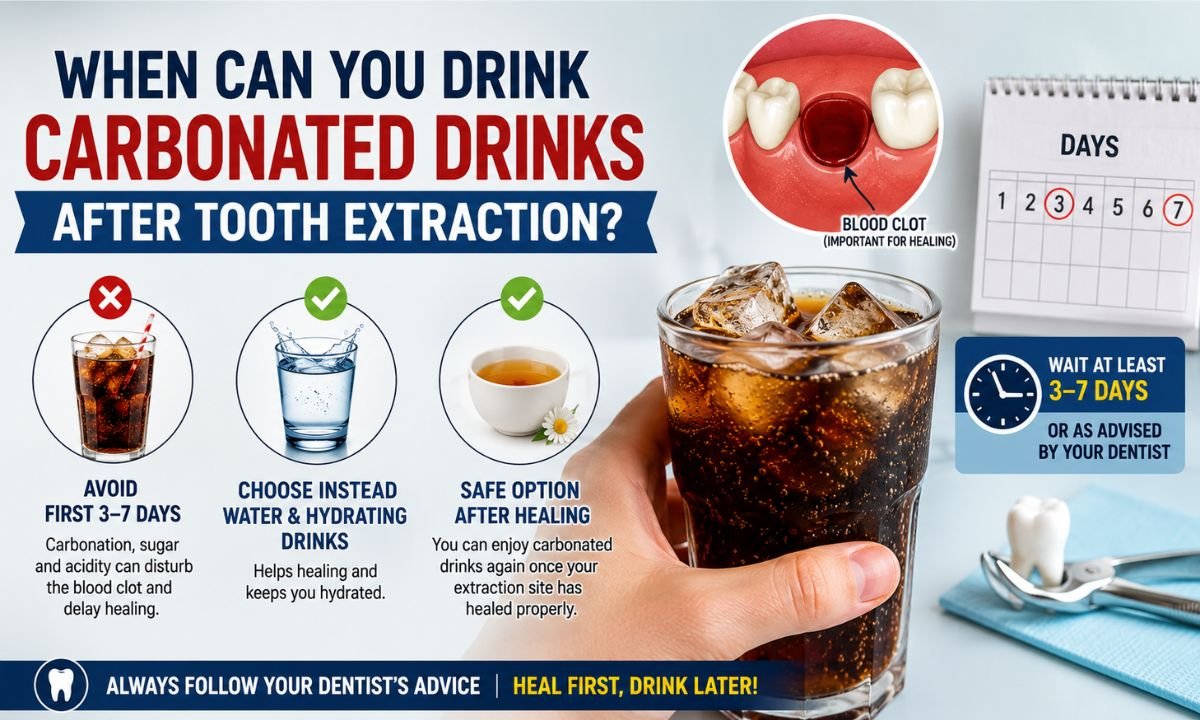
There is no single waiting period that applies to every patient because healing depends on the type of extraction, the location of the tooth, your general health, and your dentist’s instructions. Many dental sources recommend avoiding carbonated drinks for at least the first few days. Some recommend waiting approximately 3 to 7 days, while other dental guidance suggests waiting about a week, particularly after wisdom tooth removal or a more complicated surgical extraction.
For a simple extraction, your dentist may allow you to gradually return to your normal diet as the socket becomes more stable. A surgical extraction may require more caution. The safest answer to when can you drink carbonated drinks after tooth extraction is to follow your dentist’s specific instructions. If your dentist recommends avoiding fizzy beverages for seven days, follow that recommendation even if you feel comfortable sooner.
Why Are Carbonated Drinks Avoided After an Extraction?
Carbonated beverages contain dissolved carbon dioxide that creates their characteristic bubbles and fizz. The carbonation itself is not necessarily dangerous in every situation, but drinking fizzy beverages soon after extraction may irritate a healing socket. The first concern is the blood clot. The clot needs to remain undisturbed while new tissue develops underneath it. Dental aftercare guidance emphasizes avoiding actions that could disturb this clot. The American Dental Association advises patients not to rinse vigorously and to avoid using a straw after extraction.
Another concern involves the ingredients found in many carbonated drinks. Regular soda often contains sugar and acids. Acidic or sugary beverages may be less suitable during early recovery because they can irritate sensitive tissues and are not ideal for oral health. Some dental aftercare guidance specifically recommends avoiding carbonated and sugary drinks while the extraction site heals.
The Importance of the Blood Clot
The blood clot is one of the most important parts of early extraction recovery. Once the dentist removes a tooth, the body starts repairing the area. Blood collects in the socket and forms a clot. This clot protects the underlying tissues while healing begins. If you disturb the area by sucking, touching it, vigorously rinsing, or using a straw, you may increase the chance of losing the clot.
The American Dental Association notes that dry socket develops when the clot over the extraction site becomes displaced, exposing bone and nerves. This is why the first few days deserve extra attention. Avoiding carbonated drinks is one practical way to make your recovery routine gentler.
Can You Drink Soda After Tooth Extraction?
Soda is one of the most common carbonated drinks people want after an extraction. However, regular soda combines carbonation with sugar and often contains acids. Instead of drinking soda immediately after the procedure, choose still water or another drink recommended by your dentist. Once the extraction site has healed sufficiently, you can gradually return to carbonated beverages.
If you decide to drink soda after your dentist has cleared you, drink it from a regular cup rather than a straw. The American Dental Association recommends avoiding straws for 24 hours because suction can disturb the healing area. If you are also wondering are Alani drinks bad for you, it is best to wait until the extraction site has healed and follow your dentist’s advice before choosing acidic or caffeinated drinks. It is also wise to stop if the drink causes burning, discomfort, throbbing, or irritation around the extraction site.
Can You Drink Sparkling Water After Tooth Extraction?
Sparkling water may seem safer than soda because it usually contains less sugar, but it is still carbonated. Therefore, it is better to avoid it during the earliest stage of recovery. Plain still water remains a simpler choice while your mouth heals. After several days, or when your dentist gives you permission, you may gradually reintroduce sparkling water. If you experience sensitivity when you try it, return to non-carbonated drinks for a little longer.
Types of Carbonated Drinks to Consider
Different fizzy drinks can affect your mouth differently. The following table shows common categories and why you may want to delay them after extraction.
| Carbonated Drink | Examples | Early Recovery Recommendation |
| Regular soda | Cola, lemon-lime soda | Avoid during early healing |
| Diet soda | Sugar-free cola and other diet sodas | Avoid during early healing |
| Sparkling water | Plain or flavored sparkling water | Wait until the area is comfortable |
| Energy drinks | Carbonated energy beverages | Avoid during early healing |
| Carbonated juice | Fizzy fruit beverages | Avoid, especially if acidic |
| Tonic water | Carbonated tonic beverages | Wait until healing progresses |
| Carbonated sports drinks | Fizzy electrolyte beverages | Choose still fluids instead |
The exact timing depends on your extraction and healing progress. Your dentist’s instructions should take priority over general recommendations.
What Are the Benefits of Avoiding Carbonated Drinks?
Avoiding fizzy beverages temporarily can make your recovery easier. The main benefit is that you reduce exposure to something that may irritate the extraction area during its most sensitive stage. Another benefit involves hydration. When you replace soda with plain water, you can maintain hydration without adding large amounts of sugar or acidity. For general beverage guidance, Harvard’s Nutrition Source explains why water is a preferred choice and why sugary drinks such as soda, sports drinks, and energy drinks are best limited.
Water also works well with a soft-food recovery diet. Dental aftercare guidance recommends staying hydrated and choosing gentle foods while the extraction site heals. Avoiding carbonated beverages can also encourage better oral-care habits. Instead of reaching for soda throughout the day, you may naturally choose water, milk, or another dentist-approved non-carbonated drink.
What Should You Drink After Tooth Extraction?
Still water is usually one of the easiest choices after an extraction. You can sip it slowly and avoid creating suction inside your mouth. Depending on your dentist’s advice, other options may include milk, mild non-acidic drinks, or appropriate nutritional beverages. However, extremely hot drinks should also be avoided while your mouth is numb because you could accidentally burn your tissues.
UCLH advises avoiding hot foods and drinks while local anesthesia is still active. Temperature matters as much as the type of drink. A cool or room-temperature drink may feel more comfortable than something extremely hot or acidic.
Can You Make a Tooth-Friendly Drink at Home?
You do not need a complicated recipe while recovering from an extraction. A simple homemade drink can provide hydration without carbonation.
Simple Homemade Hydration Drink
Ingredients:
- 1 glass of clean, cool or room-temperature water
- A small amount of honey, if your dentist allows it
- Optional mild flavoring that is not acidic
Mix the ingredients gently and sip the drink from a normal glass. Do not use a straw. Plain water is still the simplest option. If you want more flavor, ask your dentist which ingredients are suitable for your particular extraction. Avoid adding lemon or other highly acidic ingredients if they cause irritation. Your extraction site may remain sensitive for several days, so a mild drink is generally easier to tolerate.
What Foods Pair Well With Your Recovery Drinks?
After an extraction, soft foods can make eating easier because they require less chewing. Dental aftercare guidance commonly recommends soft foods during the first few days. You might choose foods such as mashed potatoes, scrambled eggs, soft pasta, yogurt, or other foods recommended by your dentist.
Chew away from the extraction site when possible. Avoid hard, crunchy, sticky, or very spicy foods during the early recovery period. Small food particles can become uncomfortable around the healing socket.
What About Carbonated Energy Drinks?
Energy drinks deserve extra caution after extraction. They can contain carbonation, acids, caffeine, and substantial amounts of sugar or other sweeteners. During early recovery, water and other dentist-approved non-carbonated beverages are usually more practical choices. If you normally depend on an energy drink every day, ask your dentist when you can safely resume it. Do not assume that feeling better means the socket has completely healed.
Can You Use a Straw With a Carbonated Drink?
It is best not to use a straw during the early recovery period. The sucking action creates negative pressure inside the mouth, which can potentially disturb the blood clot. The American Dental Association specifically advises avoiding drinking through a straw for 24 hours after extraction.
Even after that period, follow your dentist’s instructions if you had a surgical extraction or wisdom tooth removal. When you eventually return to carbonated drinks, use a regular cup and take small sips.
Signs That Your Extraction May Need Attention
Normal recovery can include some soreness and mild discomfort. However, symptoms that become worse instead of better deserve attention. Contact your dentist if you develop severe or increasing pain, significant swelling, persistent bleeding, fever, foul-smelling drainage, or other symptoms that concern you.
Dry socket can cause significant pain because the protective blood clot becomes lost and the underlying structures become exposed. The ADA recommends contacting your dentist if you suspect dry socket. Do not try to treat a suspected complication by repeatedly rinsing the socket or touching it with your fingers.
When Can You Safely Return to Your Normal Diet?
Returning to a normal diet depends on how quickly your extraction site heals. Some people can gradually expand their diet after a few days, while others need more time. A simple extraction may recover faster than a surgical extraction, and questions like can you put creatine in hot drinks may become relevant when you start returning to your usual nutrition routine. Wisdom tooth removal can also require additional care.
Rather than choosing a specific day based only on general advice, monitor how the area feels and follow your dentist’s instructions. If your dentist tells you to wait a full week before drinking carbonated beverages, that recommendation should take priority.
Final Thoughts
If you are still asking when can you drink carbonated drinks after tooth extraction, the safest general approach is to wait several days and, when possible, around a week after a more complicated extraction. The exact timing depends on your procedure and healing progress. During the early period, prioritize water and other non-carbonated beverages.
Avoid straws, protect the blood clot, choose soft foods, and follow the instructions provided by your dentist. If pain suddenly becomes severe or your recovery seems unusual, contact your dental professional. A short break from soda or sparkling drinks can help you focus on the most important goal: allowing the extraction site to heal properly and comfortably.
Frequently Asked Questions
Q. When can you drink carbonated drinks after tooth extraction?
Many dental sources recommend waiting several days, with some suggesting approximately 3 to 7 days. After a complicated extraction, your dentist may recommend waiting longer.
Q. Can I drink soda 24 hours after extraction?
It is generally better to avoid soda this early unless your dentist specifically says otherwise. The extraction site is still healing, and protecting the blood clot remains important.
Q. Is sparkling water better than soda after extraction?
Sparkling water usually contains fewer ingredients than soda, but it is still carbonated. Waiting until your extraction site has stabilized is a safer approach.
Q. Can carbonation cause dry socket?
The primary issue with dry socket is loss or displacement of the blood clot. Carbonated drinks are commonly included among beverages to avoid during early recovery, so choosing non-carbonated drinks provides a more cautious approach.
Q. What is the best drink after tooth extraction?
Plain water is a simple choice because it hydrates you without carbonation, acidity, or added sugar. Follow your dentist’s instructions about other beverages.
Q. Can I drink through a straw after tooth extraction?
Avoid a straw during the initial recovery period. The ADA recommends avoiding straws for 24 hours after extraction because suction can disturb the healing site.