
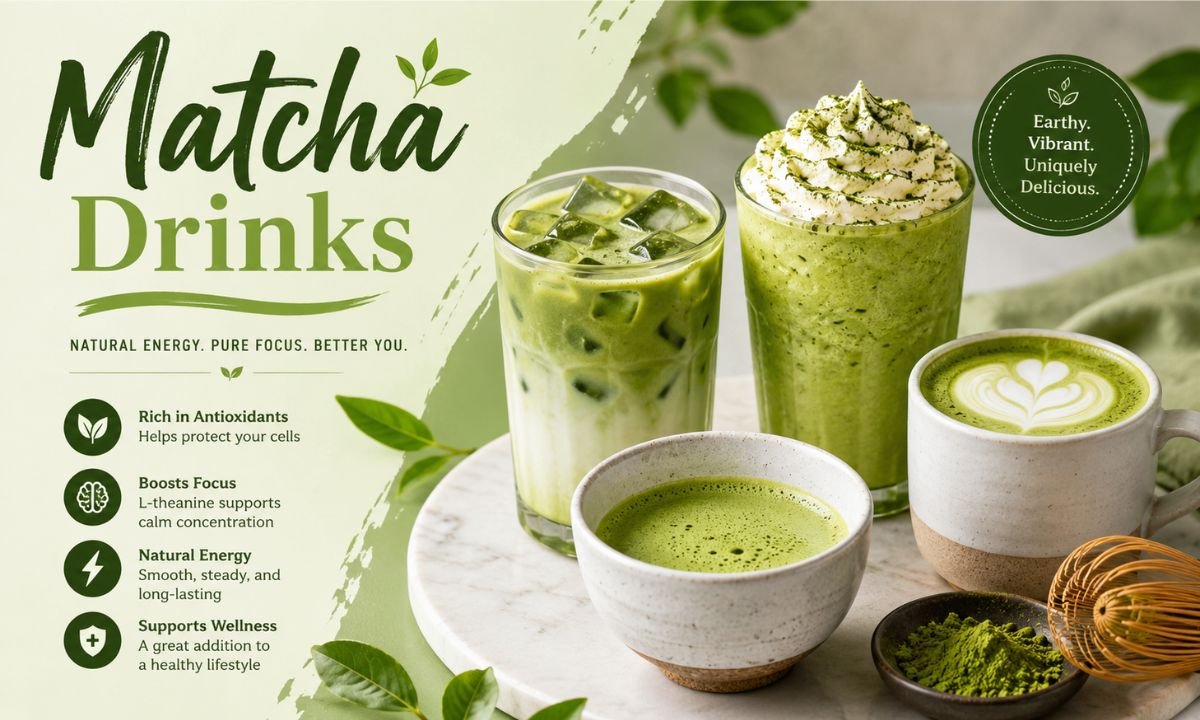
Matcha Drinks Benefits, Types & Why They Are So Popular
Many people enjoy refreshing beverages throughout the day, from coffee and tea to energy drinks and even gas station drinks. In recent years, however, a healthier option has gained attention around the world. Matcha has become a popular choice among health-conscious individuals who want a flavorful drink with potential wellness benefits.
Matcha drinks offer a unique combination of taste, nutrition, and natural energy. They have become a favorite in coffee shops, restaurants, and homes because they provide a different experience from traditional tea or coffee. Their vibrant green color and rich flavor make them stand out, while their nutritional profile appeals to people seeking healthier beverage options.
What Is Matcha?
Matcha is a special type of green tea made from finely ground tea leaves. Farmers grow matcha tea plants in the shade for several weeks before harvesting. This process increases chlorophyll production and gives the leaves their bright green color.
After harvesting, producers dry the leaves and grind them into a fine powder. Unlike regular green tea, where people steep the leaves and throw them away, matcha allows consumers to drink the entire leaf in powdered form. This process provides a more concentrated source of nutrients and antioxidants.
Matcha has been part of Japanese culture for centuries and plays an important role in traditional tea ceremonies. Today, people around the world enjoy it in many different forms.
Why Matcha Drinks Have Become So Popular
The popularity of matcha has increased significantly over the past decade. Social media, wellness trends, and growing interest in healthy lifestyles have all contributed to its success.
Many people choose matcha drinks because they offer a balanced source of energy. Unlike some beverages that can cause sudden energy spikes and crashes, matcha contains caffeine combined with an amino acid called L-theanine. This combination may help create a more stable feeling of alertness and focus.
The unique flavor also attracts many consumers. Matcha has an earthy, slightly sweet taste that pairs well with milk, fruits, and natural sweeteners. Its versatility allows people to enjoy it in numerous recipes.
Nutritional Value of Matcha
Matcha contains several beneficial compounds that contribute to its reputation as a wellness beverage.
| Nutrient/Compound | Role in the Body | Benefits |
| Antioxidants (Catechins) | Help protect cells from oxidative stress | Support overall wellness and help fight free radicals |
| EGCG (Epigallocatechin Gallate) | A powerful catechin found in green tea | Contributes to matcha’s strong antioxidant properties |
| Vitamin C | Supports immune function and skin health | Helps maintain overall health and wellness |
| Potassium | Helps regulate fluid balance and muscle function | Supports heart and muscle health |
| Iron | Assists in oxygen transport throughout the body | Helps maintain energy levels |
| Magnesium | Supports muscle, nerve, and bone function | Contributes to overall body health |
| L-Theanine | Amino acid that works alongside caffeine | May promote focus, concentration, and mental clarity |
| Caffeine | Natural stimulant found in tea leaves | Provides energy and alertness without the intense crash associated with some beverages |
Health Benefits of Matcha
Supports Natural Energy
Many people drink matcha as an alternative to coffee. The caffeine content can help increase alertness and improve focus. However, because matcha also contains L-theanine, users often describe the energy as smoother and more balanced.
This combination may help people stay productive without experiencing the sudden crashes sometimes associated with highly caffeinated beverages.
Rich in Antioxidants
Antioxidants play an important role in maintaining overall health. Matcha contains high levels of catechins, particularly epigallocatechin gallate (EGCG). Researchers continue to study these compounds because of their potential health-supporting properties.
A diet rich in antioxidants may help support the body’s natural defense systems and contribute to long-term wellness.
May Support Brain Function
Several studies suggest that compounds found in green tea may support cognitive performance. The combination of caffeine and L-theanine may improve attention, concentration, and reaction time.
Many students and professionals choose matcha before work or study sessions because of these potential benefits.
Can Be Part of a Healthy Lifestyle
Matcha contains very few calories when prepared without added sugars. This makes it a suitable option for people who want flavorful beverages without excessive calorie intake.
When combined with healthy eating habits and regular physical activity, matcha can fit into a balanced lifestyle.
Different Types of Matcha Drinks
One reason for matcha’s popularity is its versatility. There are many ways to enjoy this unique green tea powder.
Traditional Matcha Tea
Traditional matcha tea remains the simplest preparation method. A small amount of matcha powder is mixed with hot water and whisked until smooth and frothy.
This preparation highlights the pure flavor of matcha and allows drinkers to experience its authentic taste.
Matcha Latte
A matcha latte combines matcha powder with milk or plant-based alternatives such as almond, oat, or soy milk. This version creates a creamy texture that many people find appealing.
The mild sweetness of milk balances the earthy flavor of matcha, making it a popular choice among beginners.
Iced Matcha Beverages
Cold beverages are especially popular during warmer months. Iced matcha drinks combine matcha with cold water, milk, or sweeteners and are served over ice.
These refreshing options provide a cooling alternative while maintaining the nutritional qualities of matcha.
Matcha Smoothies
Smoothies allow people to combine matcha with fruits, yogurt, and other nutritious ingredients. Bananas, berries, and mangoes pair particularly well with matcha.
These beverages can serve as convenient breakfast options or post-workout refreshments.
How Matcha Drinks Compare to Coffee
Coffee remains one of the world’s most popular beverages, but many consumers now compare it with matcha.
Coffee generally contains more caffeine per serving. This can provide a stronger energy boost, but some individuals may experience jitters or nervousness. Matcha typically contains less caffeine, yet the presence of L-theanine may create a calmer feeling of alertness.
Coffee and matcha also differ in flavor. Coffee offers bold and roasted notes, while matcha provides earthy and slightly vegetal characteristics. Personal preference often determines which beverage people enjoy more.
Some individuals even alternate between both drinks depending on their daily needs and routines.
How to Make Matcha at Home
Preparing matcha at home is relatively simple. Traditional preparation involves using a bamboo whisk and a bowl.
Step 1: Gather Your Ingredients and Tools
You will need matcha powder, hot water, a bowl, and a bamboo whisk. If you want to make a matcha latte, have your preferred milk ready as well.
Step 2: Sift the Matcha Powder
Place 1–2 teaspoons of matcha powder into a bowl and sift it to remove any clumps. This helps create a smoother drink.
Step 3: Add Hot Water
Pour a small amount of hot water into the bowl. The water should be hot but not boiling to preserve the flavor and nutrients of the matcha.
Step 4: Whisk Until Smooth
Use a bamboo whisk to mix the matcha and water until a smooth paste forms. Continue whisking in a zigzag motion until the mixture becomes frothy.
Step 5: Add More Water or Milk
For traditional matcha tea, add more hot water and stir well. For a matcha latte, pour in warm milk and mix until fully combined.
Step 6: Sweeten to Taste
If desired, add natural sweeteners such as honey, maple syrup, or another sweetener of your choice.
Step 7: Enjoy Your Homemade Matcha
Serve immediately and enjoy. With a little practice, you can create café-quality matcha beverages right in your own kitchen.
Common Myths About Matcha
Many misconceptions surround matcha.
One common myth is that matcha contains no caffeine. In reality, matcha does contain caffeine, although the amount varies depending on preparation and serving size.
Another misconception is that all matcha products are the same. Quality can vary significantly. Premium-grade matcha often offers a smoother flavor and brighter color, while lower-quality varieties may taste more bitter.
Some people also believe that matcha alone can lead to dramatic health improvements. While matcha can be a nutritious addition to a healthy lifestyle, no single food or beverage provides a complete wellness solution.
Choosing High-Quality Matcha
Consumers should consider several factors when purchasing matcha.
Color is one of the easiest indicators of quality. High-quality matcha usually has a vibrant green appearance. Dull or yellowish tones may indicate lower quality or older products.
Texture also matters. Premium matcha feels smooth and silky, while lower-quality products may appear coarse.
The origin of the matcha can provide additional insight. Many respected products come from regions in Japan known for tea cultivation and production.
Where Can You Buy Matcha Drinks?
Today, matcha drinks are widely available and easy to find. Many coffee shops, tea houses, and specialty cafés offer matcha lattes, iced matcha beverages, and other matcha-based drinks on their menus. Grocery stores often carry ready-to-drink matcha products as well as matcha powder for home preparation. Online retailers also provide a wide selection of matcha brands, making it convenient to order high-quality products from the comfort of your home. Whether you prefer visiting a local café or making your own beverages, there are plenty of ways to enjoy matcha drinks throughout the year.
Conclusion
Matcha drinks have evolved from a traditional Japanese beverage into a worldwide wellness trend. Their rich antioxidant content, unique flavor, and balanced energy profile make them appealing to a broad range of consumers. Whether enjoyed as a traditional tea, creamy latte, refreshing iced beverage, or nutritious smoothie, matcha offers versatility and enjoyment in every cup.
As interest in healthy living continues to grow, matcha drinks will likely remain a favorite choice for people seeking a flavorful beverage that supports their wellness goals. By understanding what matcha is, how it is prepared, and its potential benefits, consumers can make informed decisions and enjoy this vibrant green drink as part of a balanced lifestyle.
Frequently Asked Questions
1. What are matcha drinks made of?
Matcha drinks are made from finely ground green tea powder called matcha. The powder is mixed with water, milk, or other ingredients to create beverages such as matcha tea, matcha lattes, and smoothies.
2. Are matcha drinks healthier than coffee?
Matcha drinks contain antioxidants and provide caffeine along with L-theanine, which may promote a calmer and more balanced energy boost. Whether they are healthier than coffee depends on individual preferences and dietary needs.
3. Do matcha drinks contain caffeine?
Yes, matcha drinks contain caffeine because they are made from green tea leaves. However, the caffeine level is usually lower than that of a typical cup of coffee.
4. Can I drink matcha every day?
Most people can enjoy matcha daily as part of a balanced diet. Drinking it in moderation may help support energy, focus, and overall wellness.
5. What is the best time to drink matcha?
Many people drink matcha in the morning or early afternoon for a natural energy boost. It can also be enjoyed before work, study sessions, or exercise.